Deux sénateurs américains ont demandé à la NBA de reconsidérer ses relations commerciales avec le Rwanda en raison de préoccupations concernant l’implication présumée de ce pays en RDC.
La NBA perçoit chaque année entre 6 et 7 millions de dollars du Rwanda au titre des droits de marketing et de partenariat.
Les grands clubs de football Arsenal et Bayern Munich ont mis fin à leurs parrainages au Rwanda suite aux critiques concernant le rôle du Rwanda dans l’est du Congo, tandis que d’autres partenariats se poursuivent.
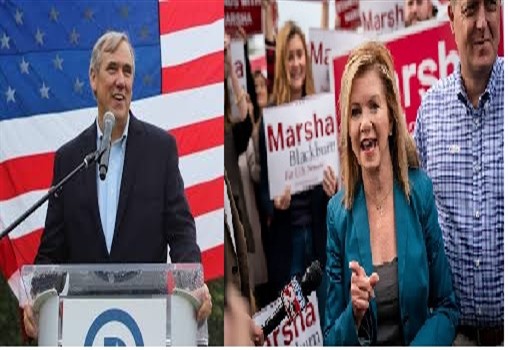
Le sénateur démocrate Jeff Merkley et la sénatrice républicaine Marsha Blackburn ont écrit au commissaire de la NBA, Adam Silver, le 23 octobre, demandant à la ligue de reconsidérer son partenariat avec le gouvernement rwandais et de répondre à six questions avant le 2 novembre.
Les sénateurs affirment que les liens commerciaux continus de la NBA avec Kigali sont de plus en plus difficiles à concilier avec l’évolution de la politique de Washington à l’égard du Rwanda, notamment les sanctions américaines imposées aux Forces de défense rwandaises en mars 2026 en raison de leur soutien présumé au groupe rebelle M23 dans l’est de la RDC.
La NBA a indiqué à ESPN avoir reçu la lettre et préparer une réponse.
Les ambitions sportives du Rwanda font l’objet d’une surveillance accrue.
Le Rwanda verserait à la NBA entre 6 et 7 millions de dollars par an pour un partenariat qui comprend l’organisation de phases de la Basketball Africa League (BAL), l’affichage de la marque Visit Rwanda et d’autres droits marketing.
Ce partenariat s’étend également aux Los Angeles Clippers de la NBA, qui ont désigné Visit Rwanda comme sponsor exclusif de leur maillot dans le cadre d’un accord pluriannuel. La marque touristique est également mise en avant à l’ Intuit Dome, la salle omnisports de l’équipe.
Cette nouvelle intervention des sénateurs fait suite à un échange antérieur en 2024, au cours duquel le commissaire adjoint de la NBA, Mark Tatum, avait déclaré que la ligue suivrait les directives du gouvernement américain concernant ses activités. Il avait ajouté que les mesures prises par la NBA seraient modifiées en cas de changement de la politique américaine envers le Rwanda.
Dans leur lettre d’octobre, ils demandent à la ligue d’expliquer son seuil d’acceptation d’argent provenant de gouvernements accusés de violations des droits de l’homme, si les récentes mesures américaines contre le Rwanda répondent aux critères définis par Tatum, et si la NBA a l’intention de reconsidérer ce partenariat.
Cet examen minutieux intervient alors que le Rwanda développe son portefeuille sportif international. Le 13 octobre, la Formule 1 a annoncé un accord de 10 ans pour ramener la discipline en Afrique, le Rwanda devant accueillir la première course au début des années 2030 après la construction d’un nouveau circuit à Bugesera.
Lire la lettre en Anglais
Dear Commissioner Silver:
We write to follow up on our 2024 letter, in which we expressed concern about the National Basketball Association (NBA)’s commercial partnership with the Rwandan government. We are increasingly alarmed by the NBA’s deepening relationship with Rwanda despite its invasion of the neighboring Democratic Republic of the Congo (DRC), its continued support for a rebel group that has committed war crimes, and the resulting major shifts in U.S. policy toward Rwanda. The NBA risks becoming complicit in sportswashing by a Rwandan government that systematically abuses human rights. That is contrary to the spirit of American sports.
In our initial letter, we raised concerns about the NBA’s partnership with the Rwandan government of President Paul Kagame given its atrocious human rights record and support for the armed group, M23, in eastern DRC. We also asked whether the NBA had sought guidance from the U.S. Department of State regarding its business activities in Rwanda and whether the league’s policies had changed in response to developments in the region. The NBA responded publicly in September 2024 when NBA Deputy Commissioner Mark Tatum stated, “If American policies were to change regarding business activities in and relating to Rwanda or any other BAL market, our actions would, of course, change accordingly.”
That commitment is particularly relevant today because U.S. policy toward Rwanda has changed since our initial letter, driven in part by Rwanda’s worsening human rights record over the past two years, including:
Rwanda’s escalation of its illegal military assault on eastern DRC, including a deployment of up to 18,000 troops.
Rwanda appears to now fully command the M23, which has summarily executed hundreds of civilians, committed mass rape, recruited child soldiers, and tortured civilians while illegally seizing control of Goma, Bukavu, and large swaths of eastern DRC.
Over 5 million people are displaced because of the conflict in eastern DRC, and 10 million people risk starvation in territory controlled by the Rwanda-backed M23.
The week after signing the U.S.-brokered Washington Accords in December 2025, Rwanda and the M23 launched a new offensive that left 200,000 more civilians displaced.
Rwanda has been consistently accused of utilizing transnational repression tactics to target political dissidents within its immediate region and internationally, including here in the United States.
As a result, U.S., UK, and European Union (EU) policies toward Rwanda have shifted markedly, and several major sports franchises have withdrawn their commercial sponsorships with Rwanda. Secretary of State Marco Rubio said in December 2025 that “Rwanda’s actions are…a clear violation of the Washington Accords,” and U.S. Ambassador to the UN Mike Waltz stated that “Rwanda is leading the region… toward more war.” The United States has since taken a number of actions, including sanctioning the Rwandan Defense Forces and Rwanda’s major gold refinery for aiding the M23 rebels, banning senior Rwandan officials from traveling to the United States, and canceling an investment conference involving Rwanda and a U.S.-Rwanda health partnership. Soccer clubs Arsenal and Bayern Munich also ended their Rwanda sponsorships in 2025 because of Rwanda’s invasion of eastern DRC. Additionally, the European Union and the U.K. have sanctioned Rwandan officials and companies.
These actions raise an important question of whether the NBA’s continued commercial relationship with the Rwandan government remains consistent with the U.S. policy on which the league has said it relies. Despite the controversies, the NBA has doubled down on its ties with Rwanda this year. President Kagame was allowed to attend the NBA All-Star Game in Los Angeles, where he met with you and “discussed Rwanda’s longstanding partnership with the NBA and continued collaboration.” Deputy Commissioner Tatum also traveled to Rwanda in June for the NBA-backed Basketball Africa League (BAL) Investor Summit, where he praised Kigali and said the country should have its own BAL team. Yet it is clear that the NBA and BAL are aware of shifting U.S. policy towards Rwanda: U.S. sanctions on the Rwandan Defense Forces in March 2026 forced the BAL to withdraw the Armée Patriotique Rwandaise (APR) Basketball Club, a team owned by the Rwandan Ministry of Defense, from the 2026 season.
Given your response to our initial letter and Rwanda’s escalating human rights violations, we ask that you provide a written response to the following questions by November 2, 2026:
What is the NBA’s red line for accepting money from foreign governments that commit human rights abuses?
How does the NBA reconcile its continued partnership with Rwanda with its purported commitment to justice?
What plans does the NBA have to stand up for justice and human rights in Africa now that it is a primary partner in the BAL? How does partnering with the Rwandan government fit into those plans?
What is the current stance of the NBA and BAL on the team, Armée Patriotique Rwandaise, and its continued participation in the association?
Now that other major sports franchises have ended their Rwandan sponsorships, what are the league’s next steps with regard to Rwanda?
What specific changes in U.S. policy toward a country would lead the NBA to change or end a partnership with that country’s government? Do U.S. government actions against Rwanda since 2024 meet that standard?
We look forward to your response. Thank you for your attention to this important issue.
Redaction


